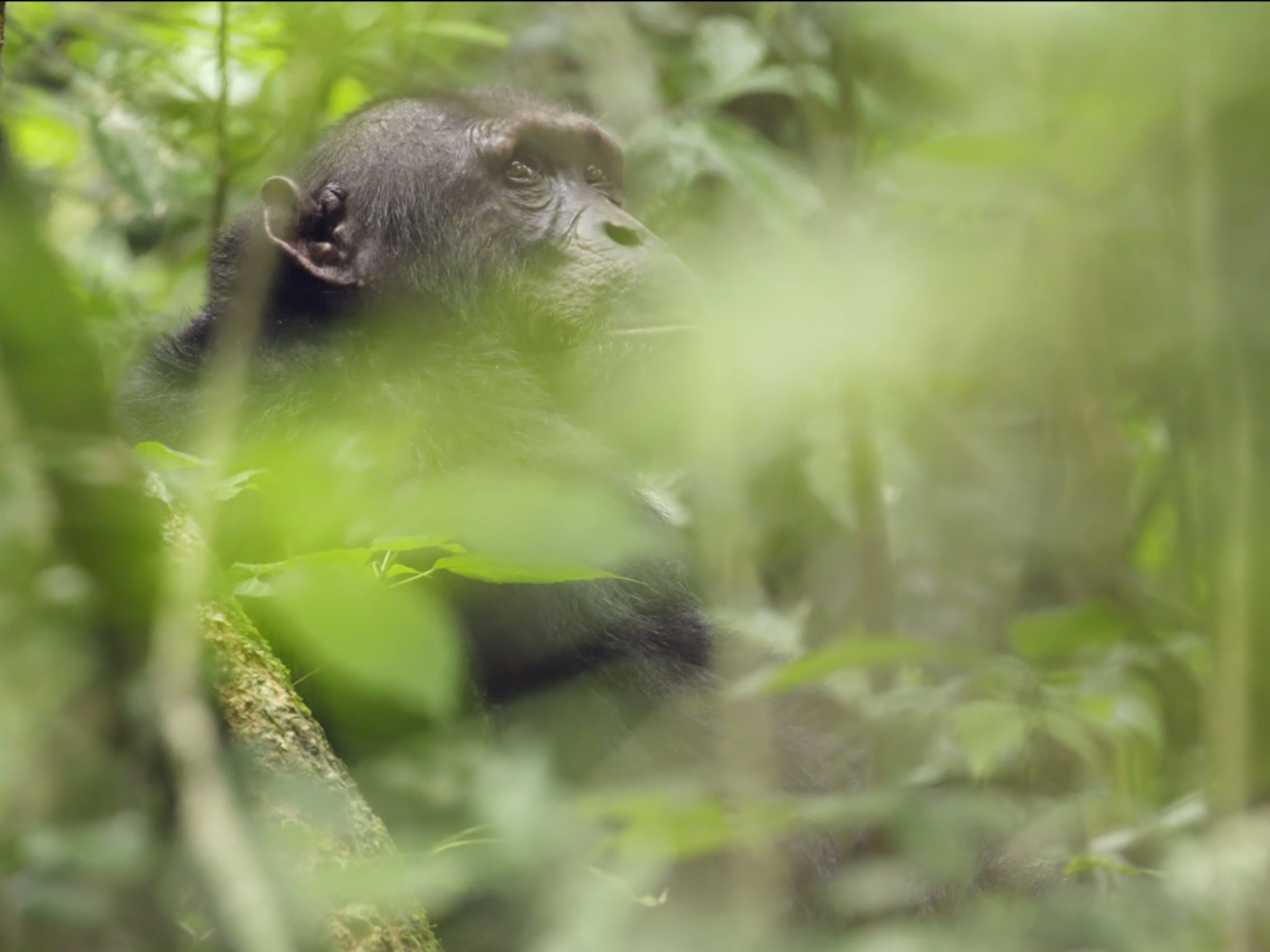
FILM SUMMARY
“When I heard about the plan to put chimpanzees on Rubondo,” Jane Goodall recalled, shaking her head, “I was shocked…they were just dumped there.”
“Shocked” was Goodall being polite when she spoke with us in 2022 about the 1960s era Rubondo radical re-wilding. Looking back from 2026, it’s hard to believe this kind of renegade animal conservation was allowed to happen. Even back then, most primatologists, zoologists, pretty much anyone in a related scientific community were horrified. But the man who helped create the continent’s burgeoning safari industry, wasn’t like most other animal conservationists. He saw an opportunity with a newly formed independent Tanganika government, keen to find a way to encourage more tourism, and ran with it. Creating his new African Jurassic Park.
Sixty years later, Rubondo would never be called a success on par with other East African safari parks like Serengeti…but it wasn’t the abject failure many expected.
The story centers on an internationally famous zoologist/TV star/Oscar-winner hiding a secret Nazi past, talking the new leader of Tanganika into turning a massive island over to him for his outrageous ‘Operation Chimpanzee’ rescue mission. His untested, unscientific idea was to re-wild a collection of ill-tempered chimpanzees from zoos and circuses across Europe to a massive island in Africa. The idea was to both saving them from being sold to labs for organ harvesting (a thing in the 1960s), and kicking off his dream of creating a new ‘Great Ape Serengeti’ safari park. Destruction, chimpanzee murder, wife-swapping, misery, bankruptcy ensues. But the chimpanzees mostly survive it all, and are now the only growing colony of chimpanzees living in the wild.
Underlying themes include: Human development vs. making room for wild animals; East Africa’s over-dependence on safari tourism; “hard re-wilding” as a solution to habitat loss; occasionally, very problematic people can do somewhat good things.

Logline
On a remote massive island in Lake Victoria, one man’s bold conservation experiment transformed a Congolese forested landscape into a thriving sanctuary for endangered and relocated wildlife—and in doing so, challenges how we define home for species and people.
Overview
Rubondo Island National Park, Tanzania, is the setting for a quietly radical conservation story. Once an island populated by fishermen with no native large mammals, Rubondo became the site of a 20th-century experiment in species translocation by a pioneering zoologist/showman. Chimpanzees, giraffes, elephants, rhinos, and dozens of other animals were moved here to create a new wild haven, a potential new Great Ape Serengeti safari park. Over decades, these introductions have reshaped ecosystems, inspired scientific study, and tested the ethics and logistics of wildlife relocation. Our film follows the island’s evolution, the people who made it happen, the animals who have made it their new home, and the scientists/academics who study the unfolding ecological consequences.
Why this film now
Climate change, habitat loss, and human-wildlife conflict are forcing conservationists to consider bold interventions—from assisted migration to rewilding. Rubondo is a living laboratory for these debates: a real-world case study in whether aggressive translocations (hard re-wilding) like this one can restore biodiversity and create resilient refuges. As the world seeks scalable conservation models, Rubondo’s successes and failures offer urgent lessons.
Structure and tone
This hour-long documentary (60 minutes) blends observational cinema and character-driven storytelling. We pair intimate, cinematic wildlife sequences with on-the-ground human narratives: rangers and conservationists who live on the island, scientists monitoring population dynamics, local Tanzanian communities, and archival voices from the island’s early translocation projects. The tone is neutral and inquisitive: we present evidence, personal testimony, and expert analysis without prescribing a one-size-fits-all answer, inviting viewers to weigh the ethical and ecological trade-offs.
Where is Rubondo Island?
Located in the southwest corner of Lake Victoria—the largest lake in Africa—Tanzania’s Rubondo Island National Park is 28 km long and on average about five km wide. At 237 sq km, it is more than twice the size of city of Paris, and more than four times the size of Manhattan. A full three-quarters of the main island is covered with thick, Conoglese-style forests.
Including the surrounding protected waters and other islets, the total area of this African Ark is over 457 square kilometers, almost eight times the size of Manhattan and more than four times the size of Paris.

Backstory Of the Island
Almost 60 years ago, a 60,000 acre island in Lake Victoria was cleared of inhabitants by the newly independent Tanzanian government and turned into an re-wilded ‘African Ark’ of sorts. The man behind it, a German Zoologist/filmmaker/TV star/author/former Nazi Bernhard Grzimek—a famous multi-hyphenate who created the Serengeti National Park and made it into the world’s most renown safari park in the late 1950s. But he was disappointed
with the results of his famous park, particularly with the fact that the government wouldn’t let him evict the people in it. So in the 1960s when Grzimek got the chance to try it again on a massive island, he knew exactly what he wanted to do differently. His radical re-wilding ideas were all there in his bestselling book, “No Place for Wild Animals.”
A handful of animals who Grzimek considered endangered species (elephants, giraffe and rhino from across the continent) were the first to be ferried over to this newly formed game preserve. Then Grzimek, aka Rubondo’s Noah, set about planning his biggest challenge: re-habituating 17 chimpanzees from zoos and circuses in Europe. Crating them and shipping them across oceans, overland and then on ferry to the island. The chosen immigrant chimps were all miserable in their current conditions, had mostly not met one another, and had never been to the island. On top of that, there was no pre-arrival habitat analysis done by Grzimek or his team to find out if they would even be able to survive on the island. In Dr. Grzimek’s words, he was: “setting them free on Rubondo.”
The stated intention was for this massive forested island park to be a new model of a hybrid zoo/game preserve—a Great Ape Serengeti National Park. But it hasn’t gone exactly according to plan.
Three generations later, the chimpanzees on Rubondo Island National Park have miraculously created the most successful wild chimpanzee colony in Africa by one very important metric…They are the only expanding population of wild chimpanzees in Africa. But otherwise this island experiment is one of Grzimek’s biggest missteps. It has never lived up to what was promised, and is certainly not uttered in the same breath as Serengeti, ever.
That said, it has this unusual, growing population of as many as 80 chimps living in one large troop who have developed their own distinct culture over the decades. So for the chimpanzee population, it may not be the failure it was long thought to be. The other animals unfortunately fared less well. The rhinos were all poached within five years of their arrival. The elephants and giraffe are doing fairly well, but will likely need an injection of genetic diversity soon. However that may not work.
Some of the issues
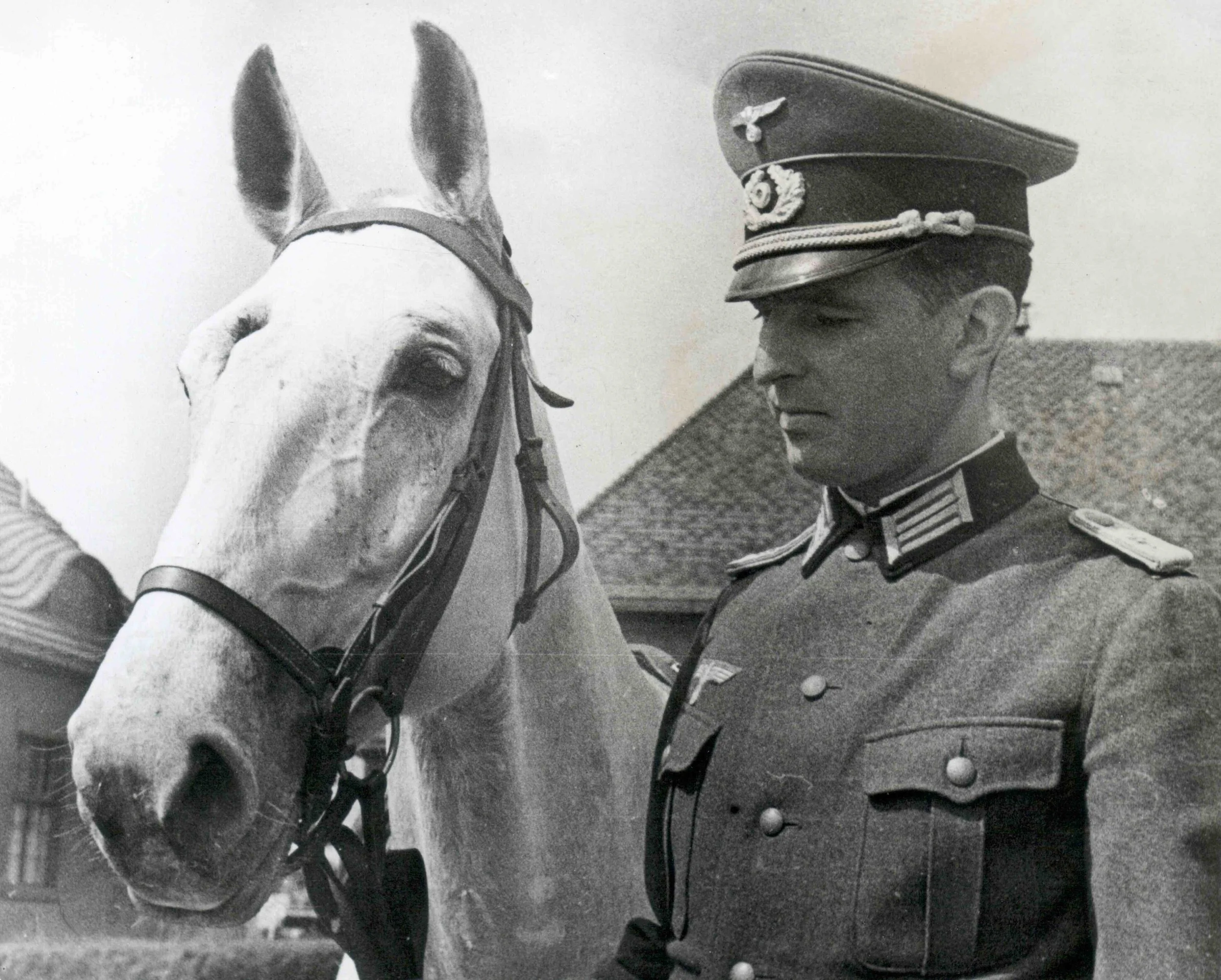
An Unclear Nazi Past
Grzimek always acknowledged being in the German army during World War II. But his story was that he only joined the party when he needed to, and played a minor role. Which turned out to be not entirely the case. Biographer Claudia Sewig discovered that he signed up for the Nazi Party well before the war, in 1936, and was an officer in charge of Nazi agricultural efforts. He was also seemingly close with at least some in Hitler’s circle, including Leni Riefenstahl.
Much of his life reads like a series of unlikely adventures, but none more than his escape from Berlin at the end of the war. With the Russians advancing on the capital, Grzimek opted to desert rather than be sent to the front, and is spirited away by his pregnant mistress out of besieged Berlin, stuffed into a giant chest and drove him through checkpoints off to the Western Front, where he surrendered to the US Military and ended up being given the role as director of the bombed out Frankfurt Zoo.
He’s also thought to have housed and saved several jewish people during the war while living in Berlin, so his past in the Nazi army is not what some had thought it was.

forced Relocation of the island’s Residents
Grzimek wrote extensively about how humans are a problem for animals to overcome in many of his 20+ books, including No Place for Animals. He saw his Serengeti National Park project as a partial failure because he wasn’t able to convince the leaders of the country to move the Maasai off the land in the Serengeti. He wanted assurances for his next project in Tanganika, Rubondo, that there would be no human residents of the island to interfere with the creation of his new African Ark. This was fine with the new president of Tanganika, Nyerere, who wanted to move more of his population to the cities to jumpstart the new country’s economy. So he made sure that all the residents of Rubondo were removed from the island before the chimpanzees arrived.
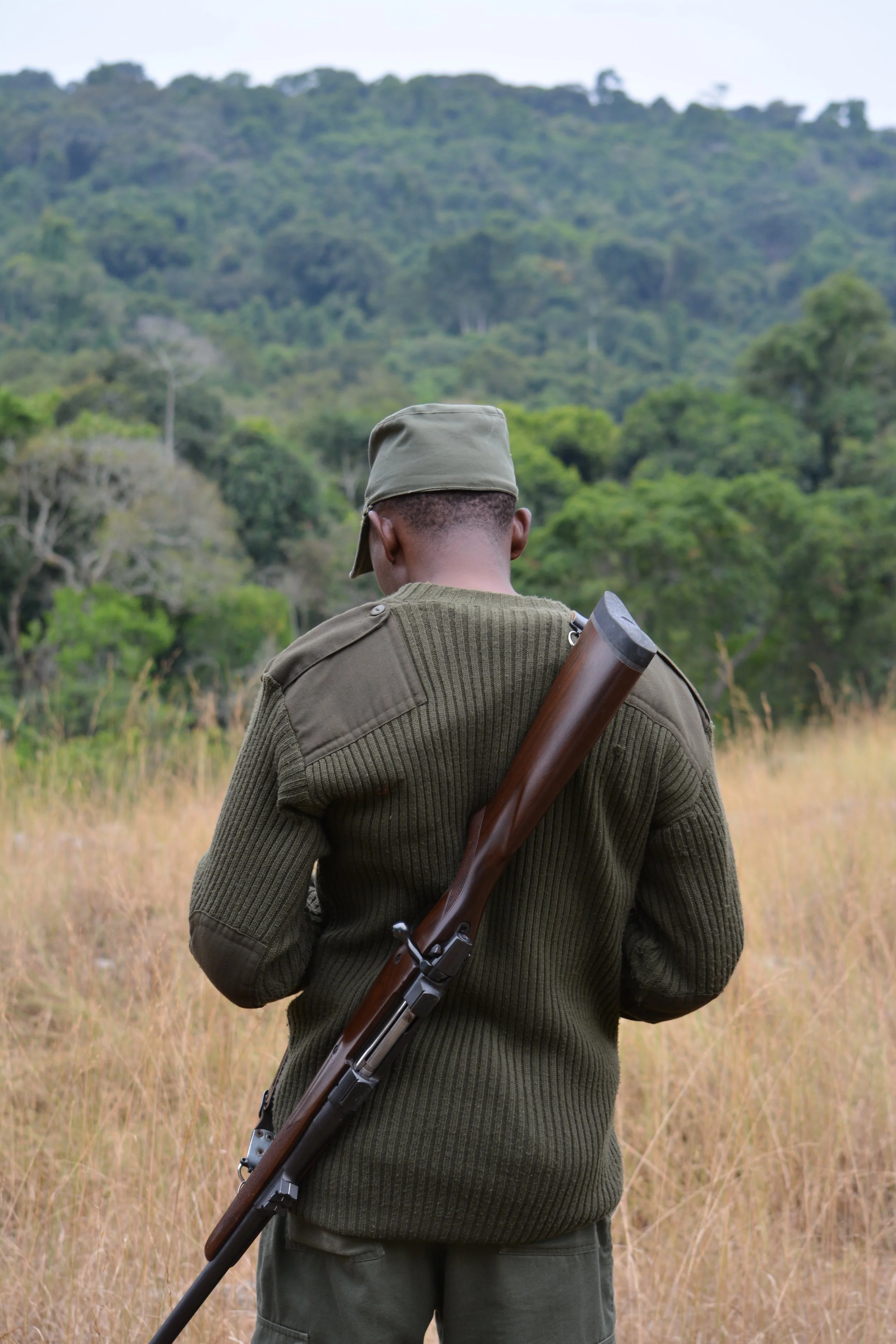
Tourism Challenges for for the island
The new generations of chimpanzees born on the island are reluctantly being habituated to humans, but seem surprisingly fearful and suspicious. Possibly dangerously so. As a result there is no precise count of how many of them there are living on the island. And with the chimpanzee population largely living far from the one safari camp on the island, and mostly avoiding contact with humans, the island is far from an ideal tourism experience.
That's a concern because tourism is what brings in much of the money that supports the park and keeps it (and its animals) protected. The island currently hosts around 1000 visitors a year. The small safari camps on the island have lost money since opening, because tourists who travel from far away to the island want to see the chimpanzees - but more often than not, they aren’t able to. And that doesn’t sit well with most people have having spent thousands of dollars to get there and days of trekking into the vast inhospitable forest.
Interviews Include
-
![Dr. Jane Goodall]()
“Rubondo should never have happened.”
Dr. Jane Goodall
-
![Dr. Christof Schenk]()
“There was no habitat survey done prior to their arrival.”
Dr. Christof Schenk, Frankfurt Zoological Society
-
![Peter Matthew]()
“We are doing the habituation differnently"
Peter Matthew, Tanzanian Parks
-
![A man with glasses and light hair sitting in a leather chair, background of bookshelves filled with books.]()
“My grandfather wasn't one to ask permission, he would just rush ahead.”
Christian Grzimek
-
![Hamza Zaragoza]()
“These chimps are very different, they’re bigger, body morphology wise than others in Africa.”
Hamza Zaragoza, Asilia
-
![David Tibanywana]()
"Why are our lives less important than these chimpanzees?"
David Tibanywana, former resident


Production Stage
-

Shooting
We are heading back in Summer/Fall 2026 to shoot with the habituators, and the park’s chimpanzee experts. We will also reshoot a few interviews in Germany and the UK that were done via Zoom during the pandemic.
-

Post-Production
We are very excited about all our fantastic archival footage and still photos from the history of the island, but are waiting to finish post until after we finish shooting on the island in mid-2026.
-
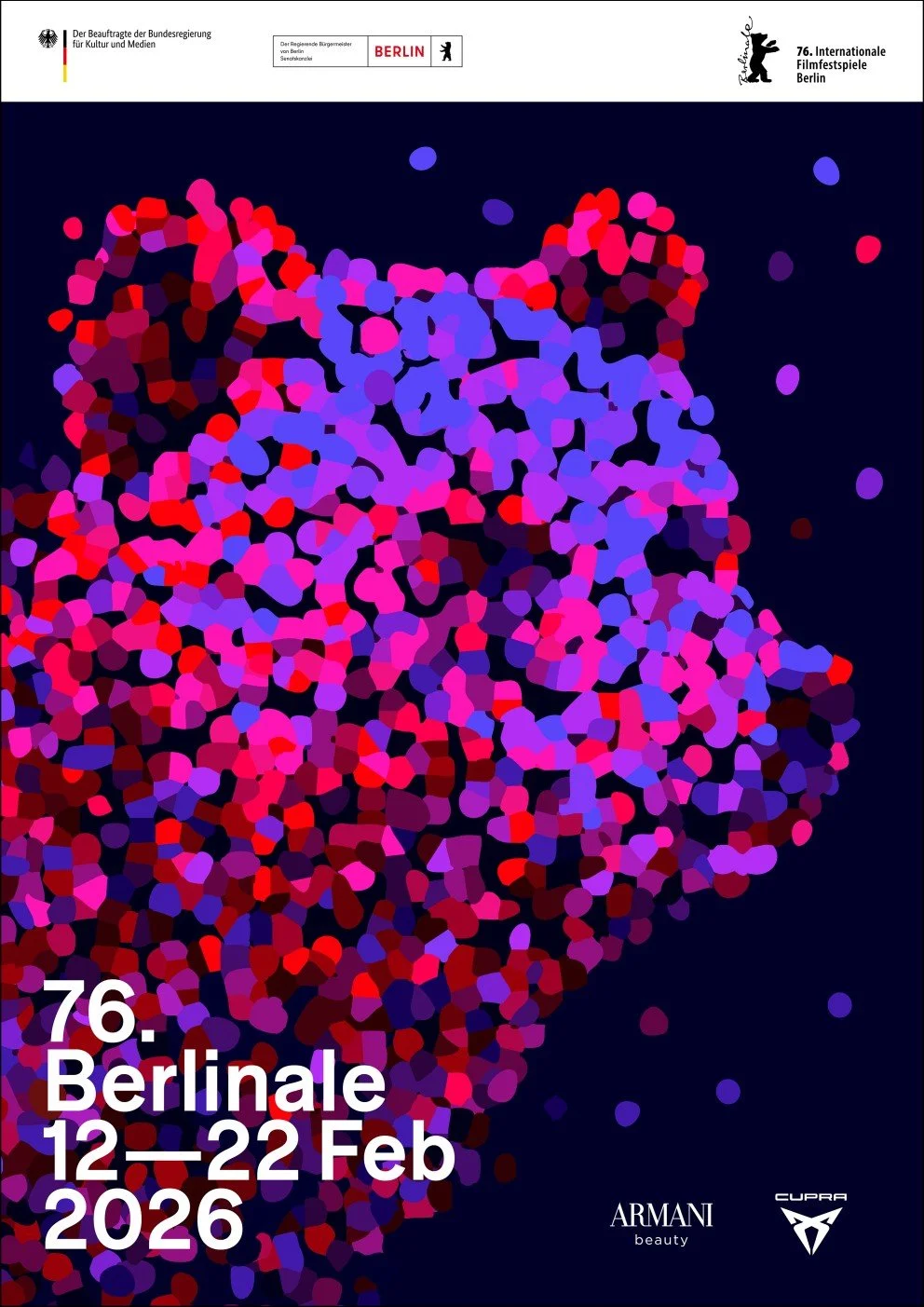
2027 Release
Grzimek won the 1956 audience award at the Berlinale for his film Bambuti, so our plan is to release Rubondo 70 years later at the Berlinale in 2027 then license for distribution.
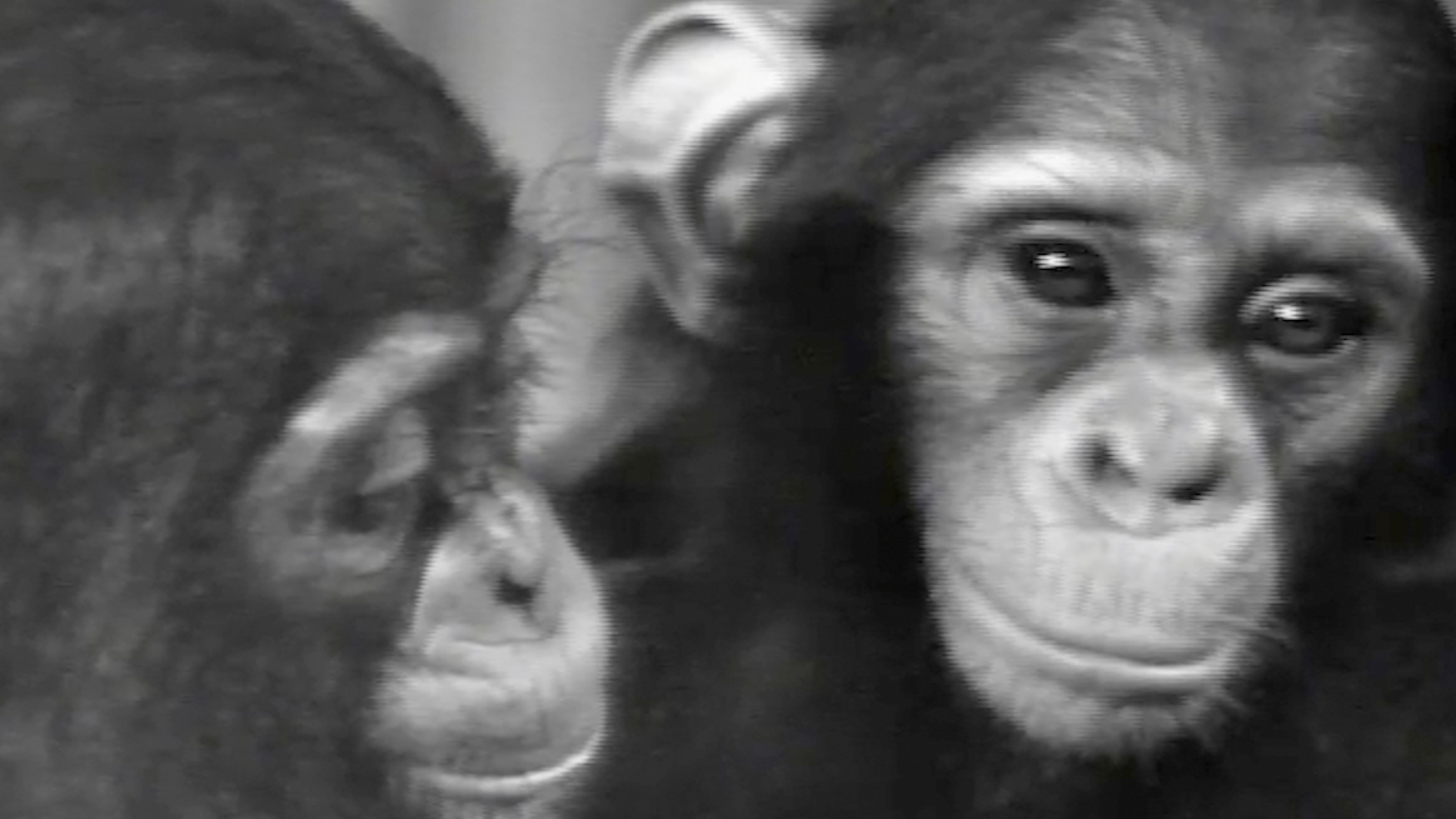
I was aware our project had its dangers…but I was delighted to give these chimpanzees back their freedom.
Dr. Bernhard Grzimek